
On Point: How This Fad Took The Fashion Industry By Storm
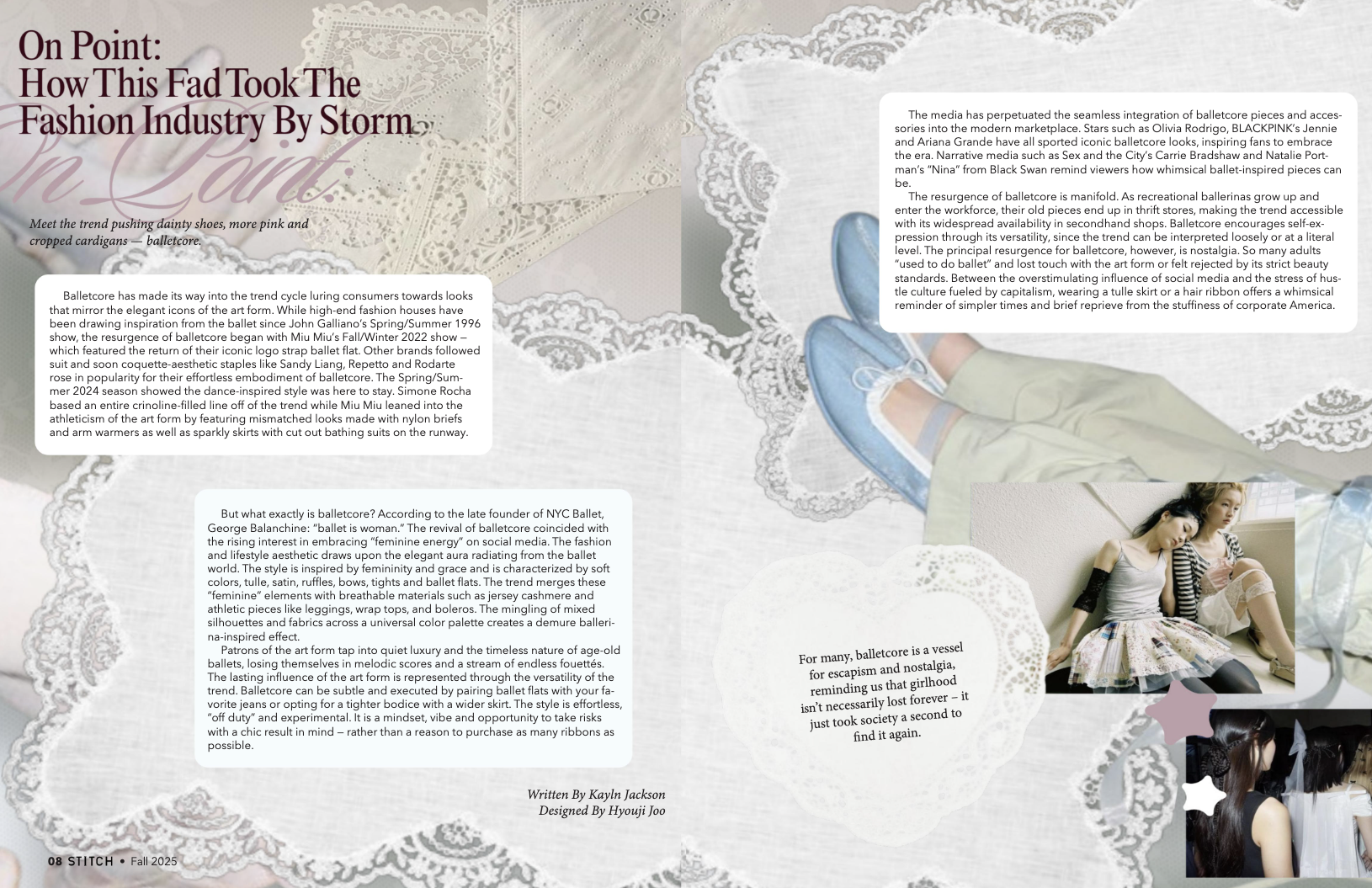
Meet the trend pushing dainty shoes, more pink and cropped cardigans — balletcore. / Designed by Hyouji Joo
Balletcore has made its way into the trend cycle luring consumers towards looks that mirror the elegant icons of the art form. While high-end fashion houses have been drawing inspiration from the ballet since John Galliano’s Spring/Summer 1996 show, the resurgence of balletcore began with Miu Miu’s Fall/Winter 2022 show — which featured the return of their iconic logo strap ballet flat. Other brands followed suit and soon coquette-aesthetic staples like Sandy Liang, Repetto and Rodarte rose in popularity for their effortless embodiment of balletcore. The Spring/Summer 2024 season showed the dance-inspired style was here to stay. Simone Rocha based an entire crinoline-filled line off of the trend while Miu Miu leaned into the athleticism of the art form by featuring mismatched looks made with nylon briefs and arm warmers as well as sparkly skirts with cut out bathing suits on the runway.
But what exactly is balletcore? According to the late founder of NYC Ballet, George Balanchine: “ballet is woman.” The revival of balletcore coincided with the rising interest in embracing “feminine energy” on social media. The fashion and lifestyle aesthetic draws upon the elegant aura radiating from the ballet world. The style is inspired by femininity and grace and is characterized by soft colors, tulle, satin, ruffles, bows, tights and ballet flats. The trend merges these “feminine” elements with breathable materials such as jersey cashmere and athletic pieces like leggings, wrap tops, and boleros. The mingling of mixed silhouettes and fabrics across a universal color palette creates a demure ballerina-inspired effect. Patrons of the art form tap into quiet luxury and the timeless nature of age-old ballets, losing themselves in melodic scores and a stream of endless fouettés. The lasting influence of the art form is represented through the versatility of the trend. Balletcore can be subtle and executed by pairing ballet flats with your favorite jeans or opting for a tighter bodice with a wider skirt. The style is effortless, “off duty” and experimental. It is a mindset, vibe and opportunity to take risks with a chic result in mind — rather than a reason to purchase as many ribbons as possible.
The media has perpetuated the seamless integration of balletcore pieces and accessories into the modern marketplace. Stars such as Olivia Rodrigo, BLACKPINK’s Jennie and Ariana Grande have all sported iconic balletcore looks, inspiring fans to embrace the era. Narrative media such as Sex and the City’s Carrie Bradshaw and Natalie Portman’s “Nina” from Black Swan remind viewers how whimsical ballet-inspired pieces can be. The resurgence of balletcore is manifold. As recreational ballerinas grow up and enter the workforce, their old pieces end up in thrift stores, making the trend accessible with its widespread availability in secondhand shops. Balletcore encourages self-expression through its versatility, since the trend can be interpreted loosely or at a literal level. The principal resurgence for balletcore, however, is nostalgia. So many adults “used to do ballet” and lost touch with the art form or felt rejected by its strict beauty standards. Between the overstimulating influence of social media and the stress of hustle culture fueled by capitalism, wearing a tulle skirt or a hair ribbon offers a whimsical reminder of simpler times and brief reprieve from the stuffiness of corporate America.
For many, balletcore is a vessel for escapism and nostalgia, reminding us that girlhood isn’t necessarily lost forever – it just took society a second to find it again.