
TikTok Told Me to Buy It: The New Era of Beauty Marketing
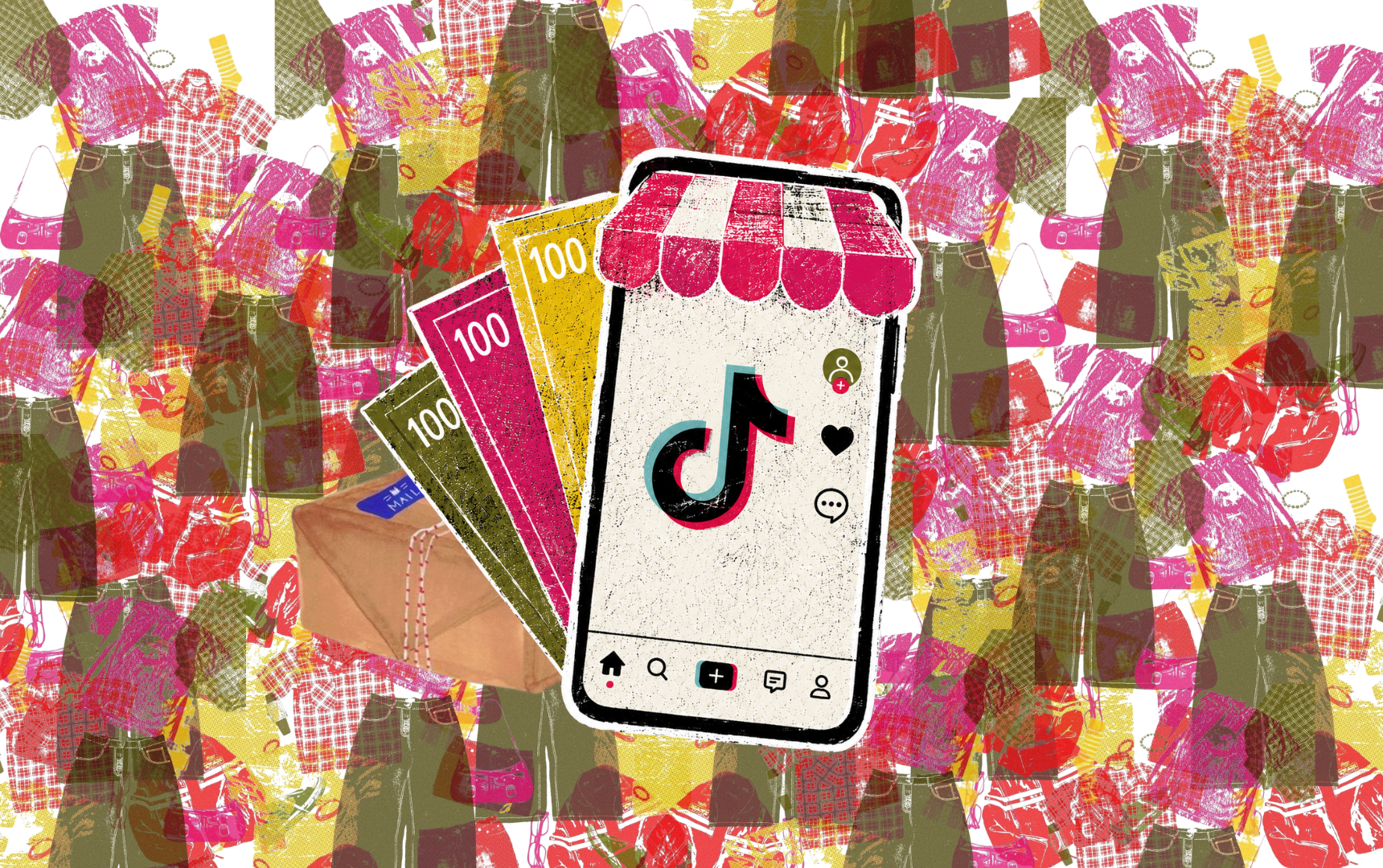
Graphic by Ana Patricio
From skincare and weight-loss supplements to designer dupes, TikTok is turning content into commerce faster than ever before.
Korean skincare, peptide injectables, mouth tape, designer glasses dupes; these are just a few of the popular items trending on TikTok Shop — an app feature that has completely redefined how Gen Z discovers and buys beauty and fashion products. However, the ease of buying products this way raises the question of whether these items are “too good to be true” and are just a way for influencers and companies to gain more money while users spend theirs.
Once known for dance trends, TikTok is now a one-stop shop thanks to influencers linking products in nearly every scroll. In 2025, there were an estimated 71.4 million social media shoppers on TikTok, up 24.5% from 2024, according to Capital One Shopping. The social media platform has become a major driver in social commerce, with Capital One reporting that Americans are now spending an estimated $32 million per day on TikTok purchases.
It’s no secret that the beauty world has always thrived on aesthetics and aspiration. Visual appeal has driven the industry's marketing playbook from glossy magazine advertisements in the early 2000s to perfectly curated Instagram posts in the 2010s. However, TikTok Shop brings something new to the table: real-time, community-driven commerce. It’s impulsive, relatable and — for better or worse — nearly impossible to resist.
Today, it is hard to scroll through TikTok’s “For You” page without being bombarded by beauty and wellness product ads. These aren’t your standard banner ads or static sponsored posts; they're embedded directly into content that feels organic and trustworthy.
Picture this: An influencer with perfect glass skin shares their everyday skincare routine on TikTok. They casually plug a “life-changing” eye cream that the influencer claims instantly got rid of their dark circles. While these micro-moments of advertising seem too small to be effective, they’re incredibly effective.
However, such “must-have” products are often paid advertisements or sponsorships, leading users to waste money on products they either don’t need or don’t really work. In other words, this means a win for beauty companies and influencers, but a loss for consumers.
Marketing-wise, TikTok’s smart linking feature is a game-changer. By allowing creators to tag specific products directly in their videos, TikTok has made shopping seem effortless. When a user watches an influencer rave about a lip stain, the exact product is almost always linked on-screen. Two taps later, it’s in their shopping cart.
It’s truly a full-circle marketing system where authenticity is currency and impulse is power.
In fact, TikTok Shop has evolved beyond selling fast fashion and gadgets — it now features high-end brands as well. Users can even now buy (used) Chanel and Louis Vuitton on TikTok Shop, gaining customers with each user who links their outfit or handbags on the social media app.
Ultimately, TikTok has created a space where trends not only go viral, but they also go straight to checkout.
This shift, however, isn’t without criticism. Critics could argue that the platform fosters overconsumption and impulsive buying. Some viewers are questioning the transparency of sponsored content and affiliate links, especially as the line between personal opinion and paid promotion continues to blur. And yet, even with these concerns, TikTok Shop continues to grow fast.
Overall, TikTok Shop isn’t just changing how and where people buy — it’s changing why they buy. On a platform where entertainment and advertising go hand in hand, trust becomes a currency that is easily exploited. However, on such a platform where anyone who has at least 5,000 followers can become a salesperson, consumers need to understand how easily a linked “must-have” product or gadget can double as a sales pitch.
In truth, behind the links and trendy products that line your “For You” page, lies another form of a consumerist trap –only this time it’s hidden behind your favorite influencer’s “must-have” product that’s really just another brand deal dressed up as a personal “rec.”