
The 20-Step Sleep: The Uncanny World of Bedtime Beauty
Design by Sara Mouasher
TikTok’s newest “Morning Shed” trend is causing people to sacrifice sleep for beauty. Safe to say, people are taking the “beauty” in beauty sleep too literally.
Imagine waking up with perfect hair, clear skin and a snatched jawline. Tempting, right? TikTok’s recent "Morning Shed” trend promises such results. However, does the routine really work, or is it just a fruitless attempt at curing human insecurity?
In a world where even bedtime has become a beauty chore, the “Morning Shed” craze ironically proves that people are now sacrificing sleep in pursuit of looking like they have had plenty of it. In other words, the “beauty” in beauty sleep is being taken a little too seriously.
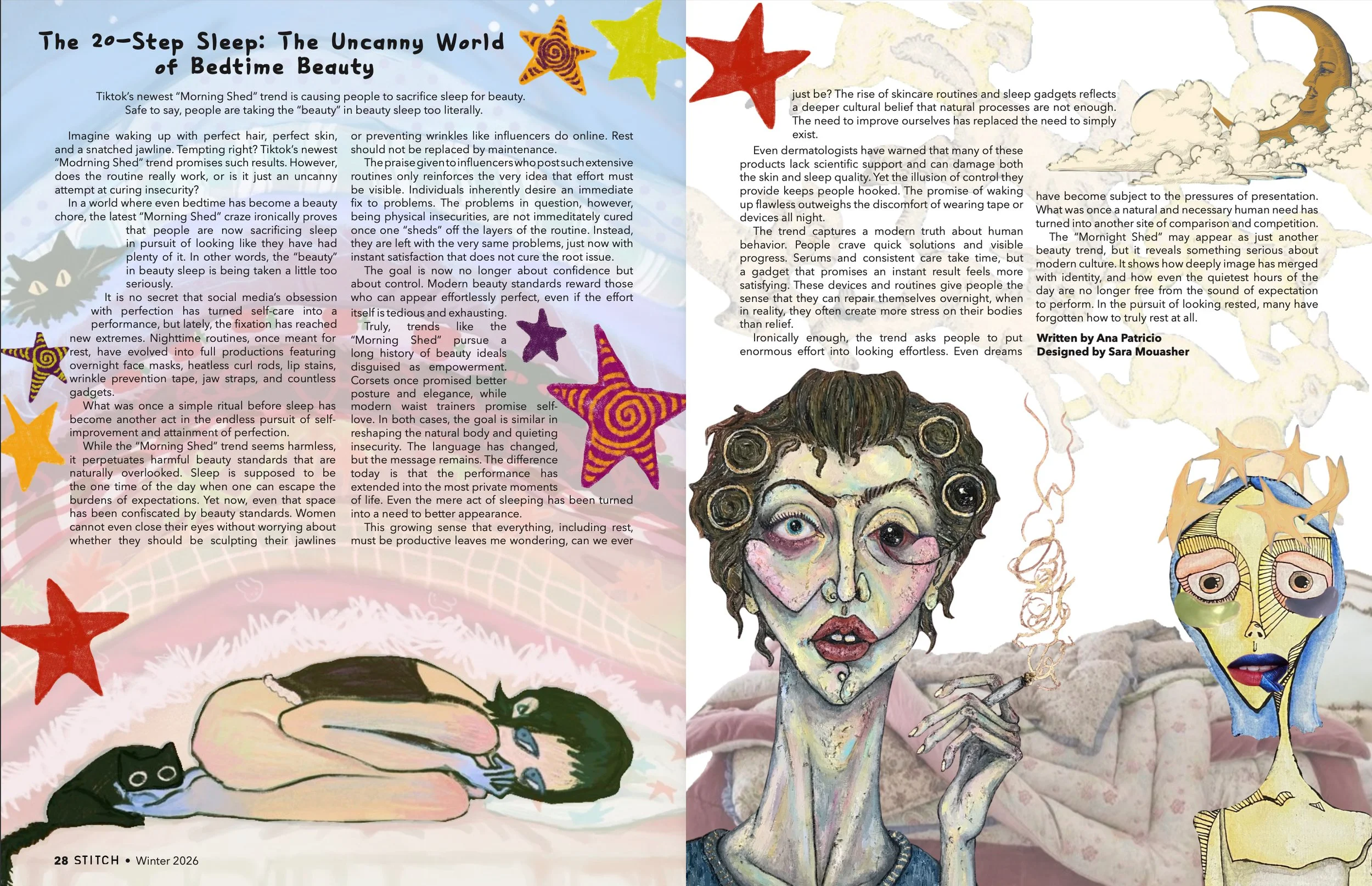
It is no secret that social media’s obsession with perfection has turned self-care into a performance, but lately, the fixation has reached new extremes. Nighttime routines, once meant as a time to unwind for the evening, have evolved into full productions featuring overnight face masks, heatless curl rods, lip stains, wrinkle prevention tape, jaw straps and countless gadgets.
What was once a simple ritual before sleep has become another act in the endless pursuit of self-improvement and attainment of perfection.
While the “Morning Shed” trend seems harmless, it perpetuates harmful beauty standards that are naturally overlooked. Sleep is supposed to be the one time of the day for an escape of the burden of expectations. Yet now, even that space has been confiscated by beauty standards. Women cannot even close their eyes without worrying about whether they should be sculpting their jawlines or preventing wrinkles like influencers do online. Rest should not be replaced by maintenance.
The praise given to influencers, who post such extensive routines, only reinforces the very idea that effort must be visible. Individuals inherently desire an immediate fix to problems. The problems in question, however, being physical insecurities, are not immediately cured once one “sheds” off the layers of the routine. Instead, they are left with the very same problems, just now with instant satisfaction that does not cure the root issue.
The goal is now no longer about confidence but about control. Modern beauty standards reward those who can appear effortlessly perfect, even if the effort itself is tedious and exhausting.
Truly, trends such as “Morning Shed” pursue a long history of unrealistic beauty ideals disguised as empowerment. Corsets once promised better posture and elegance, while modern waist trainers promise self-love. In both cases, the goal is similar in reshaping the natural body and quieting insecurity. The language has changed, but the message remains. The difference today is that the performance has extended into the most private moments of life. Even the mere act of sleeping has been turned into a need for better appearance.
This growing sense that everything, including rest, must be productive leaves me wondering, can we ever just be? The rise of skincare routines and sleep gadgets reflects a deeper cultural belief that natural processes are not enough. The need to improve ourselves has replaced the need to simply exist.
Even dermatologists have warned that many of these products lack scientific support and can damage both skin and sleep quality. Yet, the illusion of control they provide keeps people hooked. The promise of waking up flawless outweighs the discomfort of wearing tape or devices all night.
The trend captures a modern truth about human behavior. People crave quick solutions and visible progress. Serums consistent care take time, but a gadget that promises an instant result feels more instantly satisfying. These devices and routines give people the sense that they can repair themselves overnight, when in reality, they often create more stress on their bodies than relief.
Ironically enough, the trend asks people to put enormous effort into looking effortless. Even dreams have become subject to the pressures of presentation. What was once a natural and necessary human need has turned into another site of comparison and competition.
The “Morning Shed” may appear as just another beauty trend, but it reveals something serious about modern culture. It shows just how deeply image has merged with identity, and how even the quietest hours of the day are no longer free from the expectation to perform. In the pursuit of looking rested, many have forgotten how to truly rest at all.